Miles Everson’s Business Builder Daily
Wednesday: Speak on the Shoulders of Giants
In a public speaking event, you have the first 10 to 20 seconds of your speech to capture your audience’s attention.
How will you do that?
Do you first make an introduction and brief biography about yourself and then thank your audience for arriving at the venue?
One of the greatest speakers in history, Martin Luther King, Jr., has a good demonstration on how you can make an impactful power opener in your speech or presentation.
Keep reading to learn 2 tips on how you can maximize the first few seconds of your presentation time and captivate your audience’s interest and curiosity.
Miles Everson
CEO, MBO Partners
Chairman of the Advisory Board, The I Institute
Speak on the Shoulders of Giants
Dr. Martin Luther King, Jr. (MLK) is a civil rights legend who led the movement to counter prejudice in the United States of America through peaceful protest.
Through his leadership, doors to education and employment were opened for African-Americans as well.
On August 28, 1963, at the Lincoln Memorial in Washington D.C., Martin Luther King Jr. addressed the crowd with his famous “I Have A Dream” speech.
He began his speech with this line:
“I am happy to join you today in what will go down in history as the greatest demonstration for freedom in the history of our nation.”
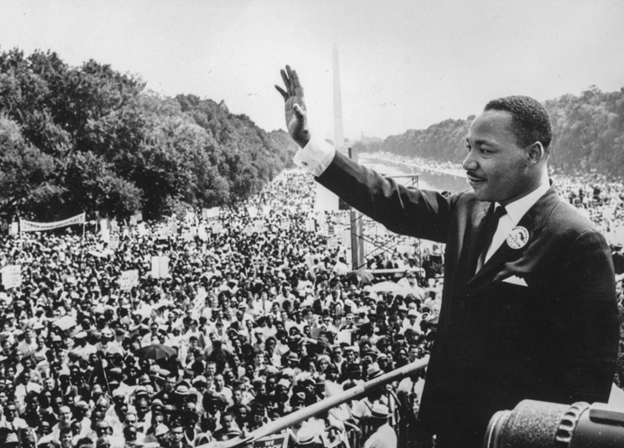
MLK’s introduction was simple, yet ear-catching, compelling, and straightforward.
It was even considered as one of the greatest power openers in history!
According to Professor Joel Litman, the President, and CEO of Valens Research, every great speech should be delivered that way.
“Every speech should open with a power opener because formal intros make for unmemorable presentations.”
What was outstanding about MLK’s opening statement?
- It wasn’t an introduction about himself and his credentials.
“Good day, everyone! Allow me to introduce myself. My name is Jonathan and I am a software engineer at [this company]. I graduated from [this university] with a degree in…”
How many times have you attended a lecture or a presentation where the speaker would begin his talk like that?
Imagine if MLK also opened his speech in that manner in 1963.
Do you think it would still elicit as much impact as he had with his original power opener?
You have the first 10 to 20 seconds of your presentation time to capture your audience’s attention.
What will you say?
Your opening words play a crucial role. It becomes the deciding factor on whether your audience will drift away from your talk or dedicate their whole attention to you.
As the speaker, don’t start with anything boring like stating your name and credentials―it has become too common and predictable to do so!
Start with something compelling and engaging for the audience to listen to.
If there’s ever an event guideline where you need to have your biography stated, ask someone else to do that kind of introduction for you.
Let someone else do the endorsement for you and the organization you’re affiliated with.
That way, you won’t have to gamble the first few seconds of your presentation and risk losing your audience’s interests. - It wasn’t an introduction about the people who attended and listened to his speech.
“Good day, everyone! First of all, I would like to take this time to appreciate you all for being here in this event. You’ve all come a long way just to be here…”
Nope. That’s not interesting enough either.
You’re not riding a merry-go-round with your audience. Stop beating around the bush!
Your audience is not there to hear you talk about them. They are there to hear about the topic of your presentation.
They already know who they are and why they’ve decided to sit through your talk―you, as the speaker, don’t need to remind them about that.
Instead, show them your gratitude and appreciation by delivering a great talk that they will surely remember for the rest of their lives!
Don’t make them regret their decision to attend and listen to you.
Your audience is there for a reason―they are hoping to learn something new from what you have to say.
Don’t waste their time; make every second of your presentation count as time well-spent for them.
How you open your speech or presentation matters EVERY TIME.
Avoid starting your talk with these two formal introductions.
Think outside of the box!
Your power opener should give you a headstart towards making a great and memorable speech.
Hope you’ve found this week’s public speaking tip interesting and helpful.
Stay tuned for next Wednesday’s Return Driven Strategy!
Powered by The I Institute